
A Forty Here and There
Something magical is happening at Kankakee Sands in northwest Indiana.
by David Krohne
I’ve turned south onto US 63 from I-74.
I’m on the way to visit some old friends.
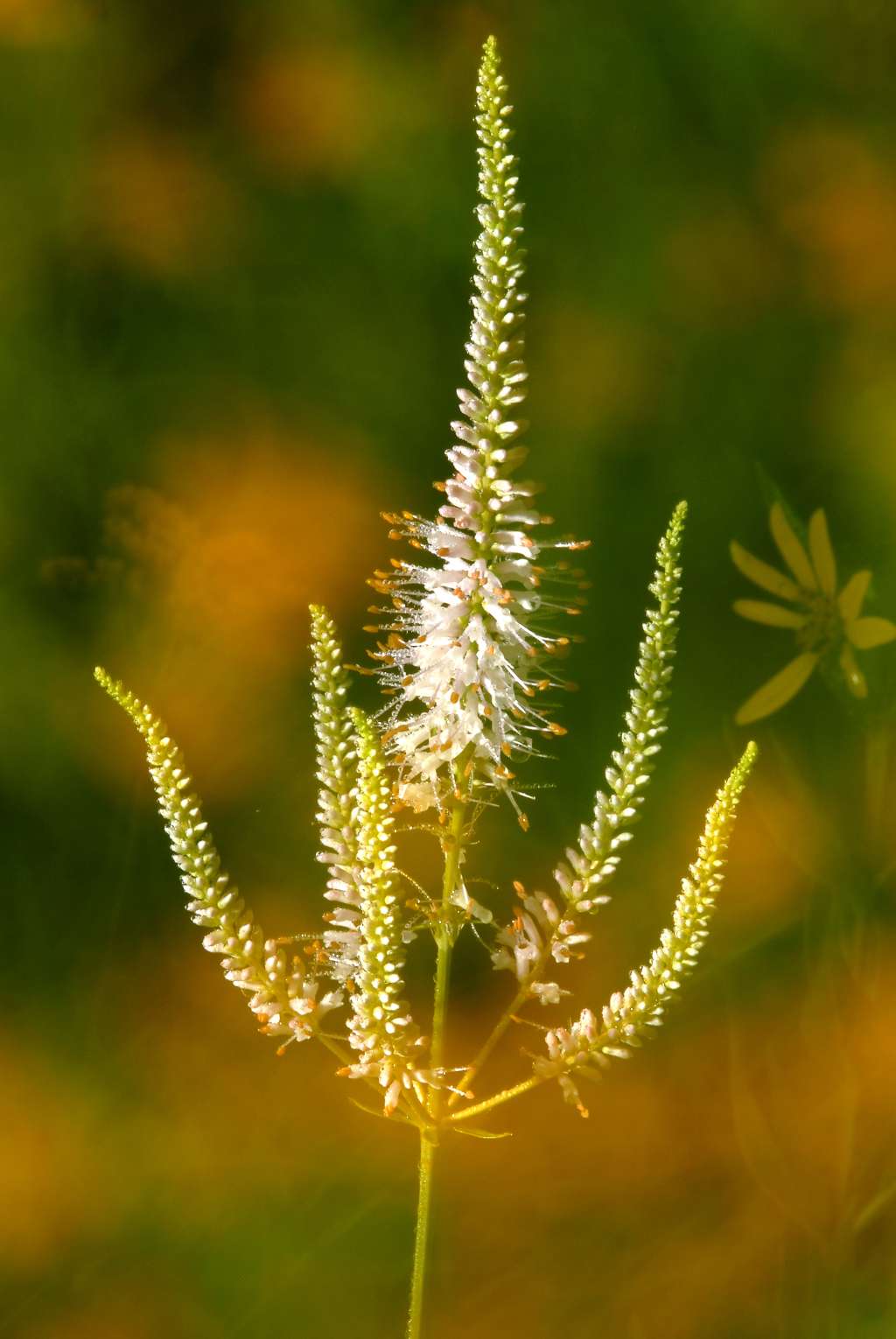
I left the westernmost American beech and the big woods on the bluff above the Wabash River. Smith Cemetery, where my friends live, is in sight of the gallery forests along the Wabash but is a world apart—the beginning of a long westward reach of tallgrass prairie. Or what once was prairie. Smith Cemetery was spared the plow and so, for a hundred and fifty years, the prairie flowers familiar to the pioneers buried there have decorated their graves, the old friends I’ve come to visit—butterflyweed, Culver’s root, cutleaf Silphium, prairie clover, and royal catchfly.
The pioneers buried here are the folks who broke the prairie sod or broke themselves trying. And when they did finally break it, one of the biological wonders of the world was lost. After the plow, there was so little left of the eastern reach of the prairie, just a few postage stamp remnants, that Leopold could write:
No living man will see again the long-grass prairie, where a sea of flowers lapped at the stirrups of the pioneer. We shall do well to find a forty here and there on which the prairie plants can be kept alive as species. There were a hundred such plants, many of exceptional beauty. Most of them are quite unknown to those who have inherited their domain.

About a corner of “a certain country graveyard” he wrote:
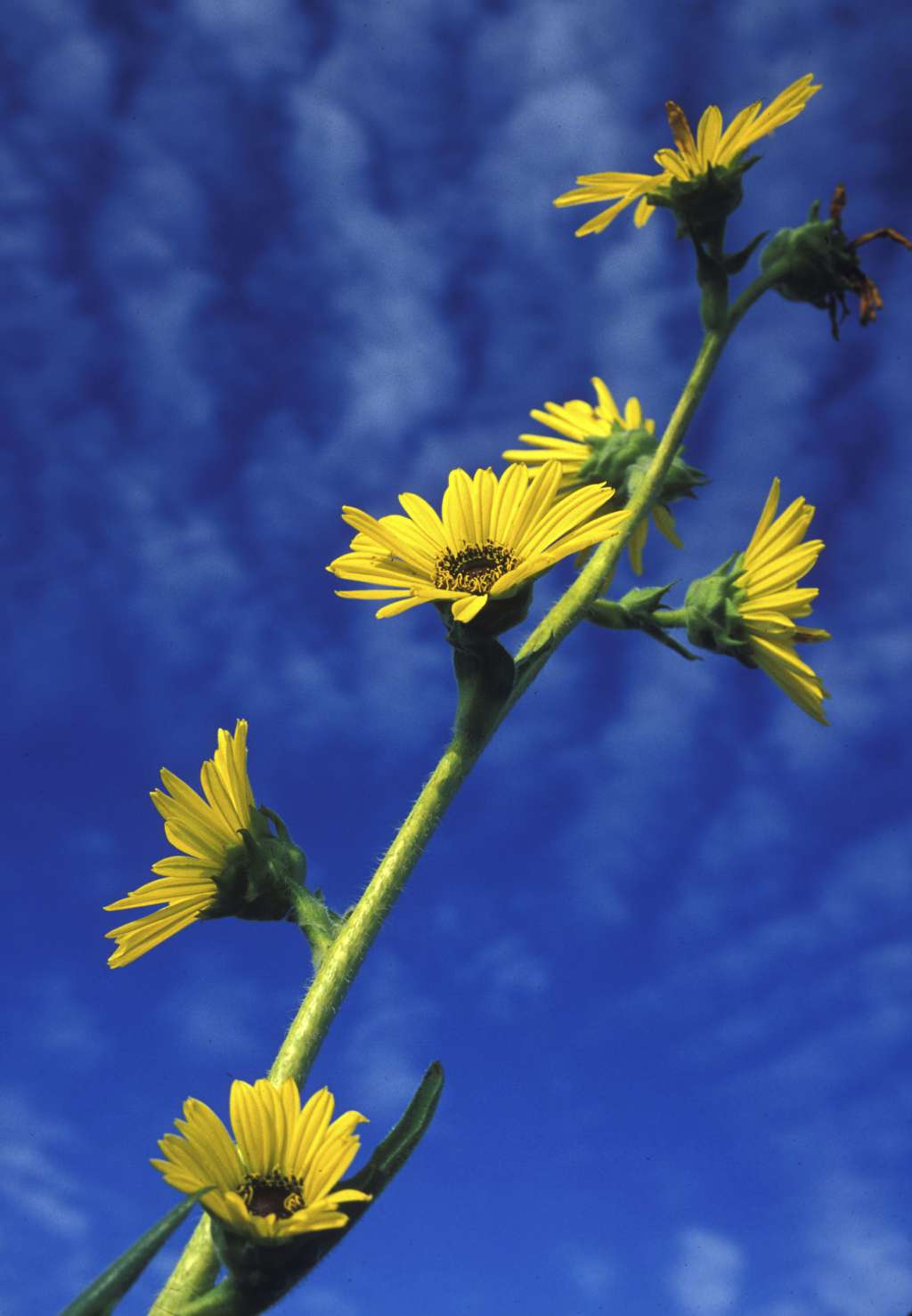
Heretofore unreachable by scythe or mower, this yard-square relic of original Wisconsin gives birth, each July, to a man-high stalk of compass plant or cutleaf Silphium, spangled with saucer-sized yellow blooms resembling sunflowers. It is the sole remnant of this plant along the highway and the sole remnant of this plant in the western half of our county. What a thousand acres of Silphiums looked like when they tickled the bellies of the buffalo is a question never again to be answered, and perhaps not even asked.

When I moved to the West, I found the scale of its ecology comforting. I can drive a thousand miles from my home in Spokane without leaving high sage desert. I can drive from North Dakota to the continental divide along a single, undammed river. I can drive from Spokane to the Pacific Ocean without leaving Douglas fir forest. I don’t have to try to conjure the awe of scale.
The extent of unbroken landscapes leads to a certain smugness in westerners. But for a prairie biologist transplanted to the West, humility seems a more appropriate attitude. When westerners wax eloquent about the size of their world and ask you how you could live in a sea of corn and soybeans, ask them to name a few Palouse prairie plants and to direct you to a good remnant Palouse prairie. You’ll see faces as blank as a newly disced wheat field.
The Palouse, like the tallgrass prairie, was the victim of its fertility. After the Pleistocene glaciers retreated back into the Selkirks to the north, deep layers of loess, wind-born mineral-rich sediments of glacial “flour”, covered the Palouse. A deep, fertile loam developed that supported a lush bunchgrass prairie dotted with flowers including a few—shooting stars, lupines, and prairie smoke—with relatives in the tallgrass.
In the tallgrass prairie, the first farmers arrived before John Deere invented the steel plow. They had to cut through the prairie sod by hand and plow what they could with wooden plowshares pulled by horses. Plowed ground was far too valuable for cemeteries so they buried their dead in unbroken prairie and bequeathed to us our best remnants. Three quarters of a century later, in the Palouse, the first homesteaders arrived with tractors and plowed until there was nothing left to plow. Their dead lie beneath Kentucky bluegrass and plastic flowers. There are more prairie remnants in Will and Kankakee Counties in Illinois than in the entire five-million-acre Palouse region of Washington and Idaho. A few paltry fields of Camas live on here and there. But they are a far cry from what Merriweather Lewis described: “the quamash is now in blume and from the colour of its bloom and at a distance it resembles lakes of fine clear water, so complete is this deseption that on first sight I could have swoarn it was water.”


No writer spoke for the Palouse as Leopold did for the tallgrass, yet another deficiency. Wheat overran the country before the poets arrived.
Although Leopold’s writing was elegiac, even bitter, he conceived of the restoration of prairie from yard-square relics and a forty here and there, to prairies measured in sections. Eighty years ago, his vision took shape at the first prairie restoration project, Curtis Prairie, at the University of Wisconsin arboretum. In 1962, Ray Schulenberg began an ambitious restoration at the Morton Arboretum in Illinois. The first acre, known as “Schulenberg’s Miracle”, was established from seed collected from Chicago area remnants and some 80,000 hand-planted seedlings. A few years later, Pete Schramm of Knox College realized that restorations measured in acres require mechanized planting. He took his seed drill on the road and left a legacy of prairies across the Midwest. Eighty years after Leopold’s vision first became reality, restorations worthy of the word “vast” dot the tallgrass states.
After you’ve completed a grand tour of Illinois and Indiana cemetery remnants, take a field trip to the Efroymson Restoration at the Nature Conservancy’s Kankakee Sands in northwestern Indiana. In the quarter century since its inception, the prairie has grown to 8400 acres, contains 600 native plant species, 240 species of birds, 70 species of butterflies, and 900 species of moths. Grass to the horizon, flowers in a hundred colors. Bison being bison. Here, Greg and I could exchange our macro lenses for wide angles.
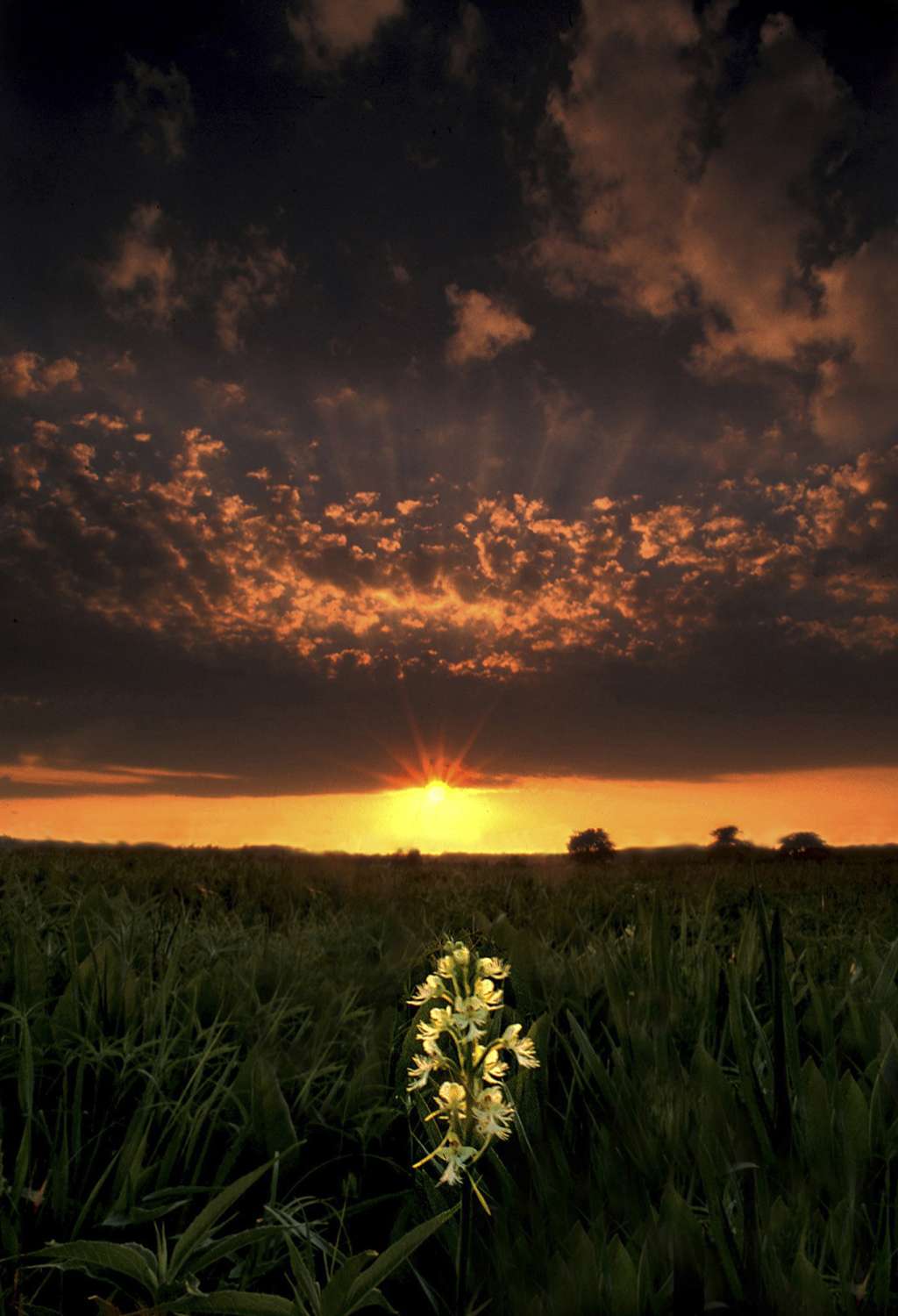
Something magical happens at this scale. At sunset, standing in a sea of grass, you realize you’re in the landscape that gave us Cather’s My Antonia, Sandburg’s Prairie, and the Largo from Dvorak’s New World Symphony. Kankakee Sands is not a delicate, precious remnant; it is prairie with all the ecology that word really entails—competition and cooperation, grazing and predation, disturbance and stability, hill prairie on the swells, sedge meadow in the swales, fire here but not there, oak savanna over there. Bison wallowing, moving, grazing, eating this but not that, molding the landscape physically and biologically. Thirty years ago, I wrote this:
How fitting then, that the prairie plants we know are relegated to these old cemeteries, for they are dead. If they have no ecological or evolutionary future, are they not truly dead? The plants that bloom here are ghosts, shades that remind us of our past. This, then, is their “field of dreams” from which they can never leave. A seed that falls in the field crowding the old fence is doomed. Corn prefers to be with its own kind.
How wrong I was! We found a forty here and there and those forties became thousands and, on those thousands, we set the prairie flora free to live, die, and evolve. And tickle the bellies of the buffalo.
