One Fish
Each fish tells a different story . . .
Photos and text by David Krohne
More than a million salmon came up the Columbia River this year. That’s far more than in 2021 but far less than the 16 million that entered the river every year before we did our best to destroy both their river and their ocean. Salmon management—habitat improvement, harvest rates, hatchery production, momentum for dam removal—all depend on numbers. So does our collective optimism or pessimism.
The salmon stories we tell are stories of abundance. Idaho settlers described sockeye salmon bank to bank and stacked three deep in streams a thousand miles from the ocean. In 1826, the botanist David Douglas recorded Spokane Indians spearing 1700 60lb chinook salmon in one morning. Ethnographers estimate that the Indians of the Sacramento and San Juaquin Rivers consumed 8.5 million pounds of salmon annually.
I have my own stories of abundance. I’ve seen the surf boil with a thousand salmon waiting for high tide to carry them into an Alaskan river. I’ve watched a standing wave flow upstream, a river-wide bore tide of salmon. This fall I stood in one spot and caught and released thirty salmon in two hours. Downstream, an old boar grizzly with an enormous salmon belly, slept off his gluttony.
We are so awed by their abundance that we conflate the essence of salmon with their prodigious numbers. On the Columbia, the Frazer, and the Yukon, salmon is a collective noun. But high in these watersheds, on the creeks and tributaries where the salmon journey ends, we learn a different grammar. Spend a day there. Watch one fish. Don’t be distracted by all the others. Watch one fish.
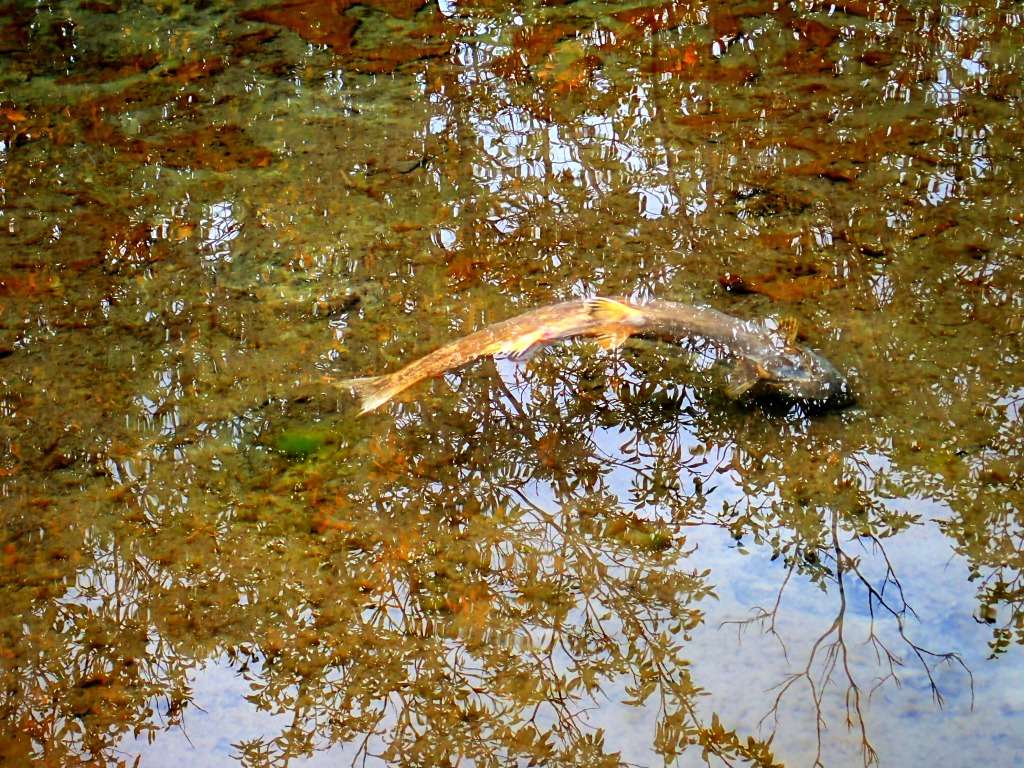
Watch one fish breathe in an inch of water.
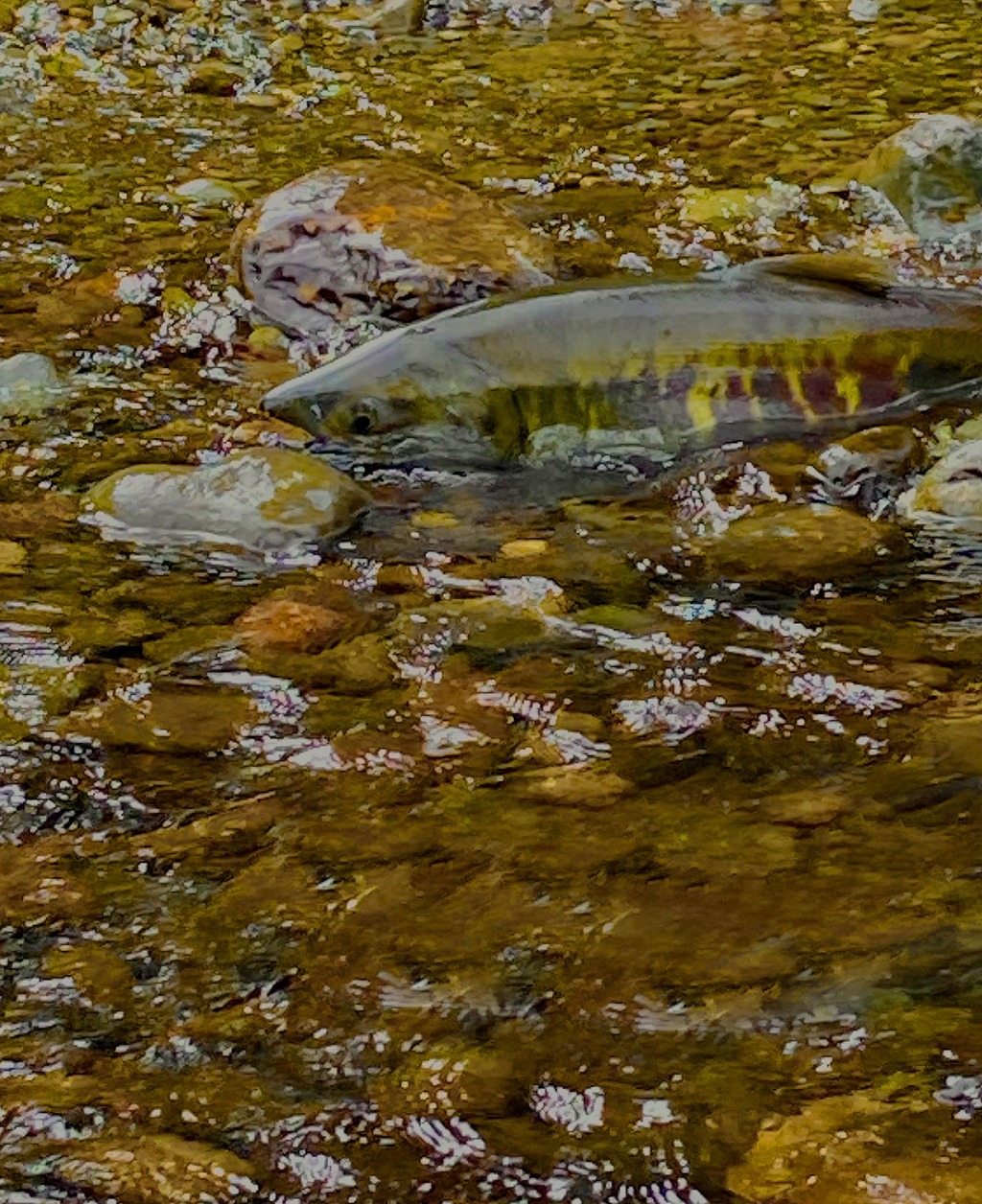
Watch a zombie fish fight to remain upright.
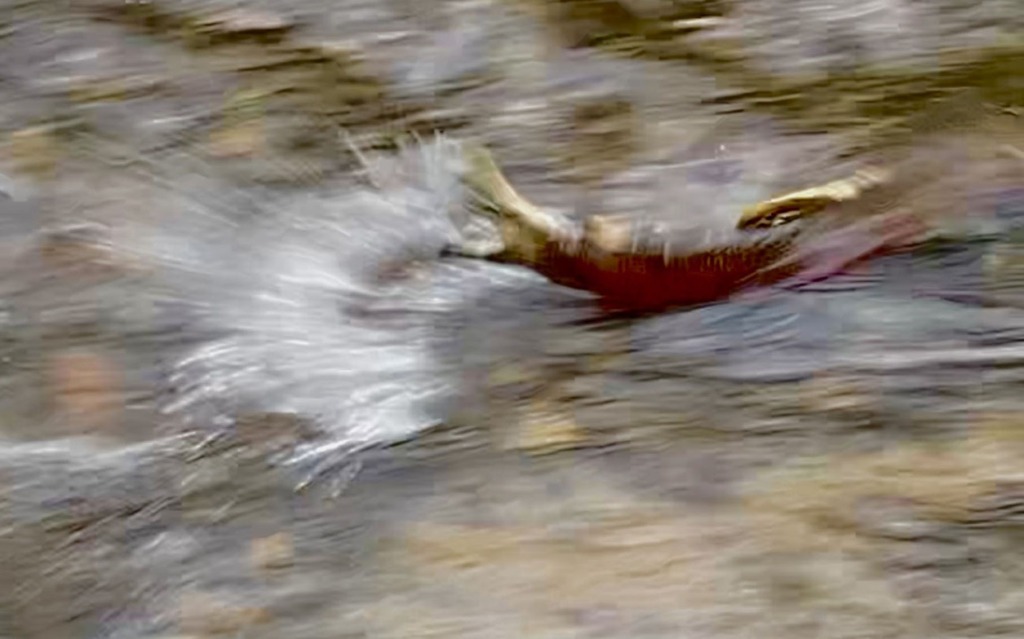
Watch a death-red salmon struggle, fail, rest, and surge one last time.
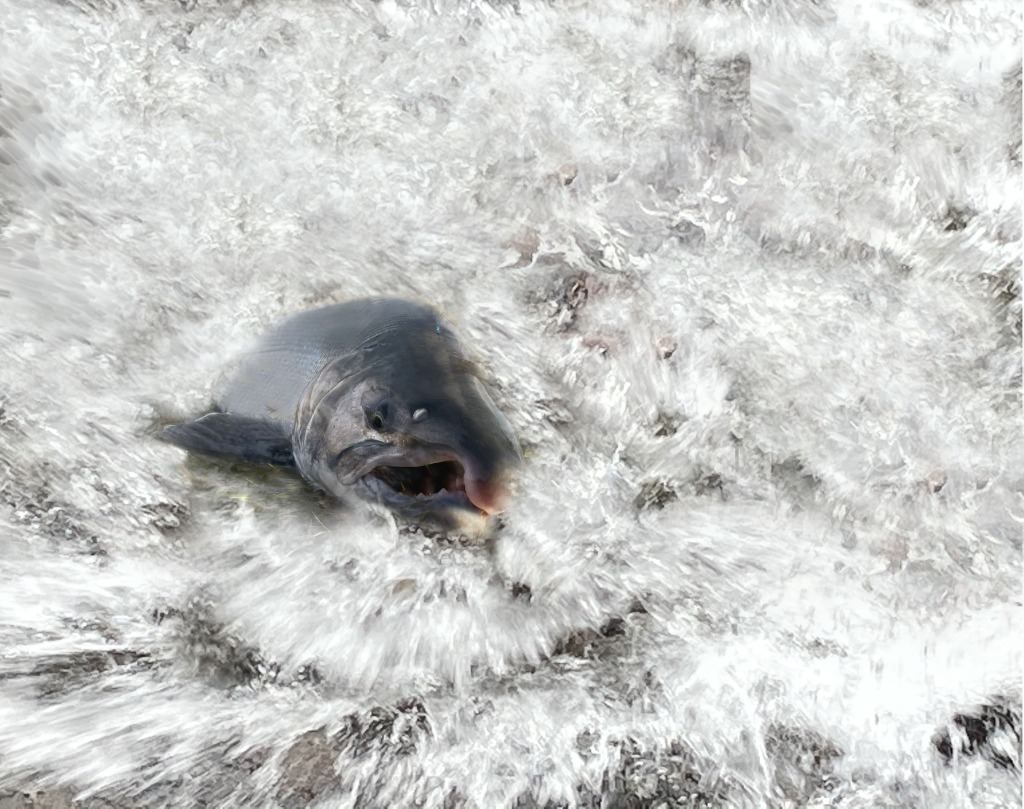
Watch a chrome-bright fish explode through the foam.
Look hard at a dead fish—a grotesque death grin, filleted by a bear, picked by gulls.

Or a serene still life.
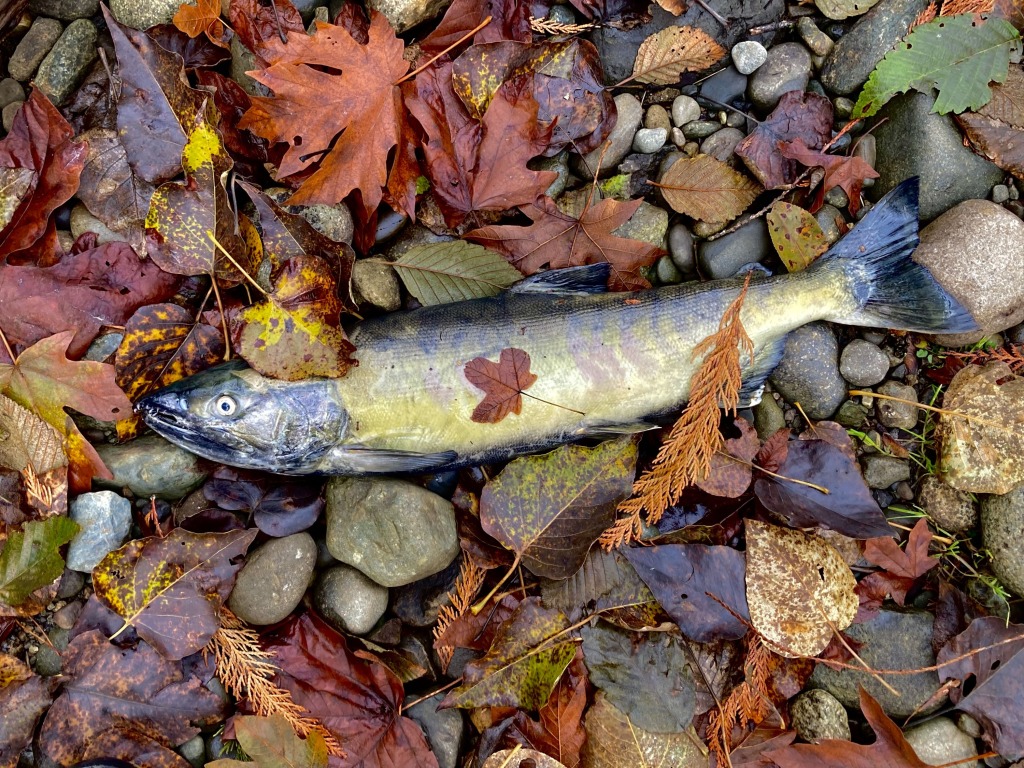
Watch a fish, home after four years and 5,000 miles, finning, resting, tasting a memory.

These fish have lived their lives en masse, from egg to ocean, and back.
In the headwaters, as the end nears, the final journey is solitary.
Here, salmon is singular. The measure of these fish is not found in any number, but in each one’s unrelenting obedience to the charge written in its genes.
Each fish tells a different story; each fish tells the same story: salmon swam in these waters for six million years before there were numbers to count them.