The Fixed Stars
What can age not steal from us?
Photos and text by David Krohne
Age is a thief. It steals the present tense. I was a mountaineer. I was an endurance athlete. I was a wilderness traveler. I was an outdoorsman. I was a professor of ecology. These things, individually and collectively, were my identity. Now, past tense all.
Don’t feel sorry for me; I’m fortunate—I can still do so many of the things I love to do. But, gradually or suddenly, these things too will go the way of technical climbing, triathlons, ski marathons, and remote white water.
This spring I reconnected with some old Midwestern friends. We are at an age when something—disease, stroke, death of a loved one, cumulative injuries, arthritis, chemo, age—has robbed us of something we hold dear. All are defiant; their innate curiosity and creativity prevail, the will to recover, to carry on, is fierce. But the slope of the line is inevitably negative. Our experience with the prince of thieves raises the question, what can age not steal from us? What identity, what essence, prevails in the face of “I can no longer___”?
I found my friends’ resolve inspiring, yet none could answer those questions. But two other old friends led me to an answer. I spent a day at my beloved Crystal Lake and another at Weston Prairie.
My friendship with Crystal Lake goes way back. I first knew the place from Aldo Leopold’s A Sand County Almanac, the book that changed my life. The young Leopold’s first duck came from there. Not long after I read his description of that moment in “Red Legs Kicking”, my first direct connection to the place came on ecology field trips, just as I was falling in love with both Sheryl, who became my wife, and ecology, which became my vocation.
It was on those trips that my mentor, Pete Schramm, showed me the meaning of the verb to teach. Eventually, I had the joy of seeing Crystal Lake through my own students’ eyes. I trained my dogs there, gathered morels, made some of my favorite photographs, and fell through the ice on a subzero February day.
I hunted Crystal for 20 years. Along the way, I found two of my dearest friends. Three of the best dogs that ever owned me made their first retrieves there. Now they lie under an enormous pin oak on Leopold Point.
The Crystal Lake Club was founded in 1885. Its boundaries secured one of the great pristine marshes of the upper Mississippi. It must have been a stunning landscape. River bullrush, willow, ash, and maple ringed the wetlands. In the uplands, groves of pin oaks merged with remnant native prairie. Moist soil plants—duckweed, arrowroot, smartweed, and wild rice—fueled migrating ducks. In those early days, a big north wind brought clouds of ducks and some of the best shooing in the Mississippi Flyway.
But the late 19th century also saw the beginning of the industrialization of the Mississippi Valley for agriculture and shipping. And so began the slow decline, the aging, of the marsh. Just after the turn of the century, the first levees were built along the river, destroying forever the natural rhythm of flood and renewal. A young Leopold wrote to his mother about the effect of the levees on the marsh and the shooting. In the depths of the Depression, the club had to sell nearly half the property to stay solvent. As a result, half the country Leopold once hunted is corn. The last of the native prairie was plowed under to grow wheat to attract more geese. Corn grows where smartweed thrived. In 2008, a levee failed and the marsh lay beneath six feet of water for weeks. When the water finally receded, the invasive, reed canary grass took over acres and acres of newly disturbed ground, crowding out native duck foods and shading out pin oak seedlings.
In its 138th year, what remains of Crystal Lake?
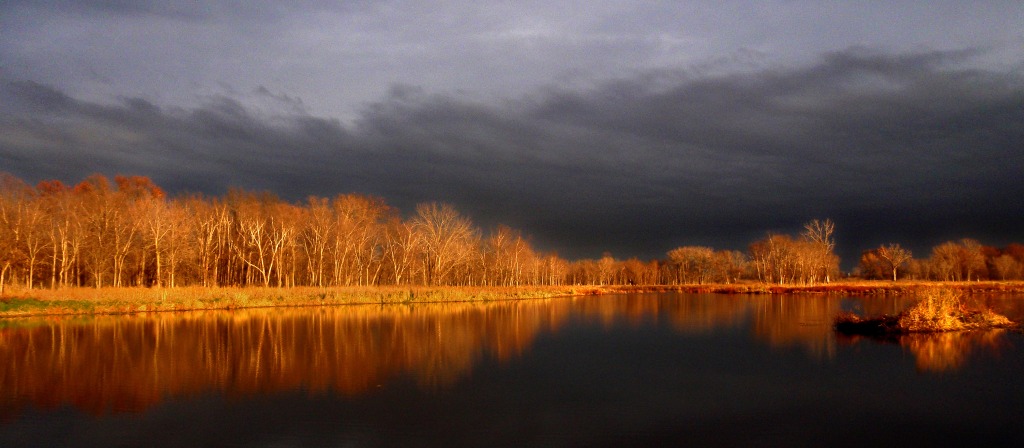
What remains are the pin oaks glowing gold at first light and coyotes greeting the dawn with yips and barks. I watched sunrise at the north end of the lake, where hundreds of sandpipers, dowitchers, willets, yellowlegs, and a lone whimbrel probed the mudflats, interrupted occasionally by a bald eagle testing the flocks for the injured. Skeins of white pelicans glided in to loaf on the lake.
My friend Andrew and I walked the entire property. The wounds are there for anyone to see. But so is the magic. Mallards, teal, and shovelers flushed from every ditch, voicing their annoyance. Geese dared us to come closer to their nests. Wood ducks screamed from deep in the timber. I fell asleep that night to a chorus of mating frogs.

Crystal Lake is Crystal Lake.

The next day I stopped at Weston Prairie in the early evening. An island of unplowed prairie in a sea of corn, Weston may be the best remnant prairie in Illinois. The destruction of the prairie is old news. We’ll never again see the prairie as boundless as the sea, as Willa Cather knew it: “As I looked about me, I felt that the grass was the country, as the water is the sea. The red of the grass made all the great prairie the color of wine stains, or of certain seaweeds when they are first washed up. And there was so much motion in it; the whole country seemed, somehow, to be running.”
There is no longer enough grass to be running.
My relationship with Weston Prairie Cemetery dates to about the time I first knew Crystal Lake. I first visited the remnant fifty years ago with Bob Betz, who did more to identify and protect prairie remnants than anyone, including Leopold. I’ve photographed its flowers, picked seed for prairie restoration, and felt the cleansing heat of prairie fires. Thirty years after Betz’s pivotal survey of the flora of Illinois prairie remnants, my students and I re-surveyed his sites, including Weston, to see how fast species are disappearing from these little prairie islands. On a class field trip there, a student asked a question with the saddest answer I’ve ever had to give: “If we let all these cornfields lie fallow, would the prairie reclaim them?” “No.”
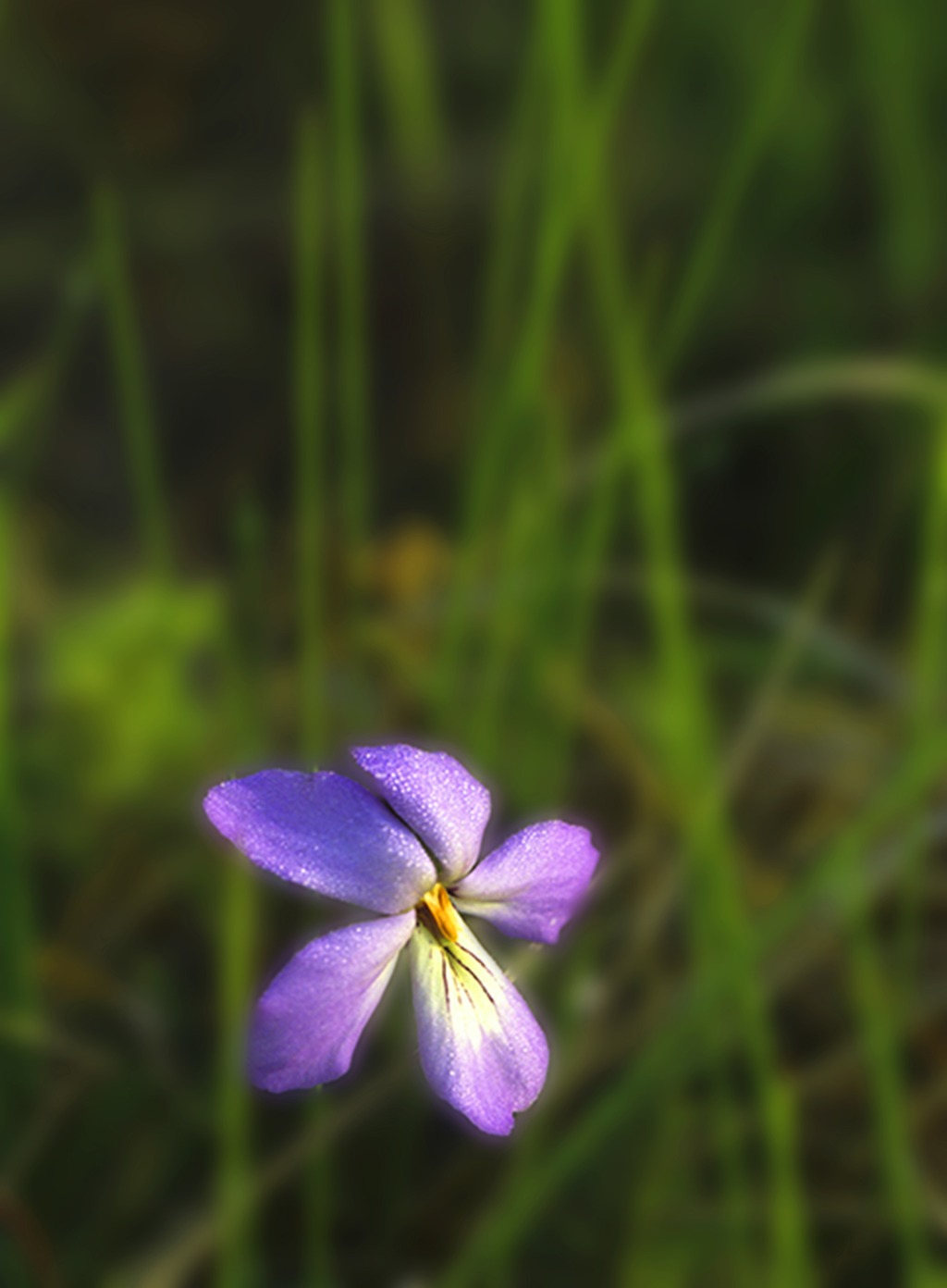
I arrived at just sunset, when last year’s grass stood wine-red against an orange sky. A few shriveled seed heads remained from the glory of Weston’s fall gentians. A red-winged blackbird nest was already bursting with enormous gaping mouths attached to tiny featherless bodies. A handful of prairie violets hugged the ground, out of the wind. They are the earliest harbingers of the symphony of color that will come. From these opening notes, the symphony will build to its summer crescendo, then fade to the coda, the gentians of fall.
Weston is prairie. The prairie is dead. Long live the prairie.
There is a hidden unity in the sweep of time. You can feel it in places like Crystal Lake and Weston where the present and the past are one, inextricably linked. If the present is the past is the present, the past cannot diminish the present—in the land, in my friends, or in me.
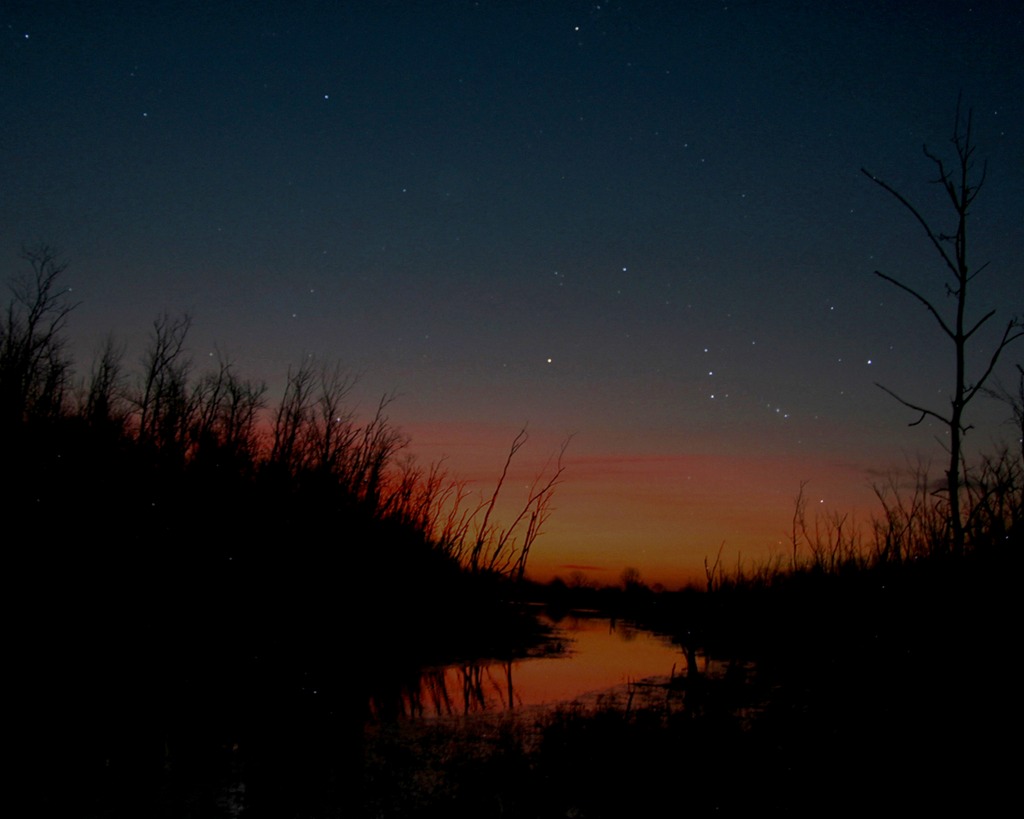
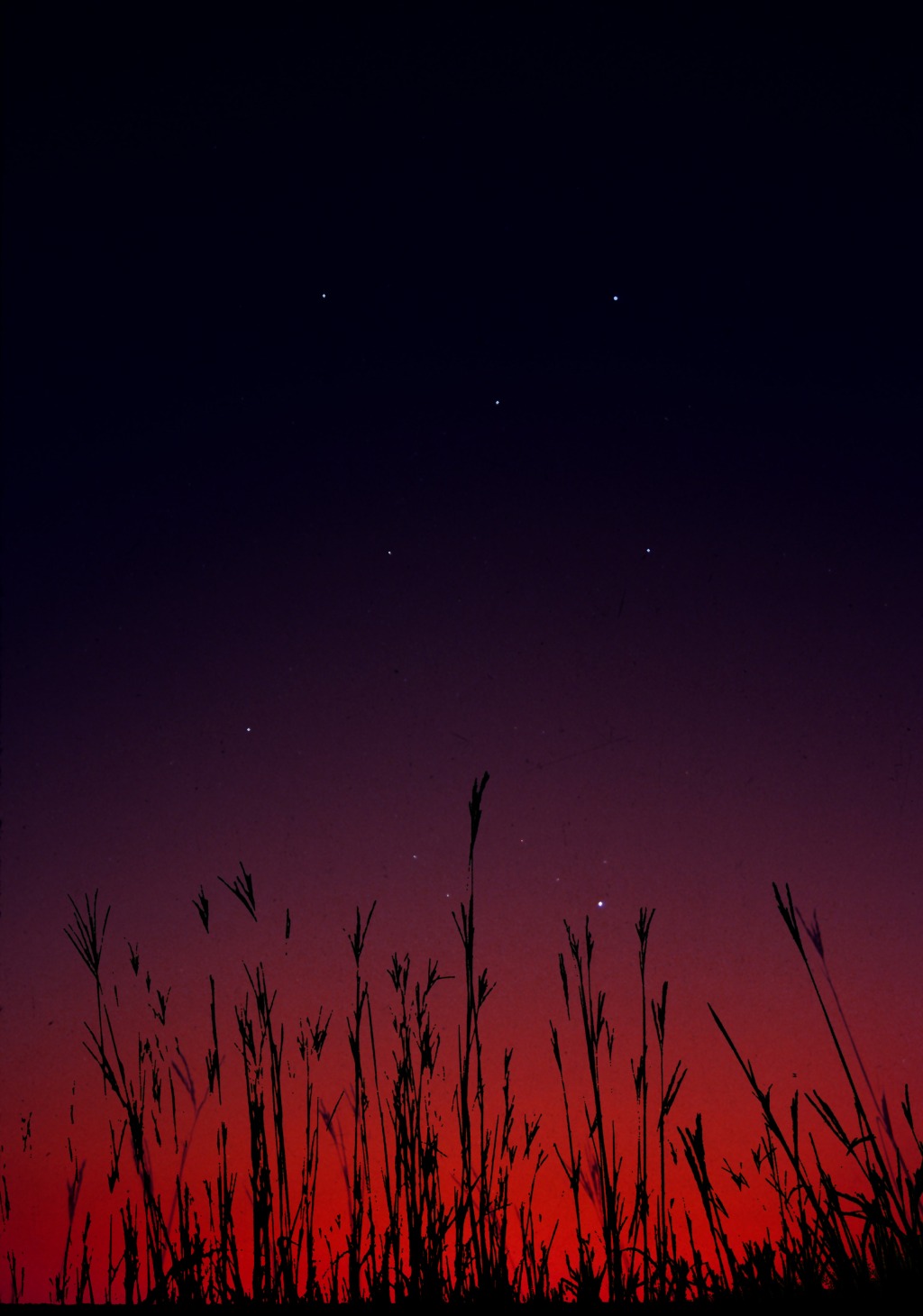
At Weston this fall, as the light fades on an October evening, the summer constellations Cygnus and Lyra will set in the west behind a veil of big bluestem. In the night, needles of frost will grow on the last of the gentians as they have for three thousand Octobers. The next morning, Orion will rise as the first light touches Ewinger’s Hole at Crystal Lake. Wings will rip the darkness as they have every fall since the ice sheets melted.
The light from those constellations left millions of years ago. During that time, their “fixed stars” have drifted into new, unrecognizable patterns we won’t see for ages. The familiar constellations remain because their ancient light just now reaches us. My youth has passed. But I remain. And what remains is as much a part of what I once was as the stars of Orion’s belt on an October morning.